

 中文简体
中文简体 Español
Content
Understanding Jacquard Fabric
Jacquard fabric is a category of woven textile characterized by intricate, built-in patterns created directly during the weaving process rather than through printing, embroidery, or dyeing afterward. The technique is named after Joseph Marie Jacquard, a French weaver and inventor who developed the Jacquard loom in 1804. This loom used a system of punched cards to control individual warp threads, allowing weavers to produce complex designs with a level of precision that had previously required painstaking manual labor. Today, computerized Jacquard looms carry on this legacy, enabling manufacturers to create elaborate motifs, florals, damasks, brocades, and geometric patterns with remarkable consistency and speed.
Unlike simple weaves such as plain or twill, Jacquard weaving allows each warp thread to be raised or lowered independently. This gives designers far greater freedom to create raised textures, contrasting colors, and multi-layered patterns within a single piece of cloth. Because the pattern is woven into the structure of the fabric itself, Jacquard textiles tend to be more durable and richer in appearance than printed alternatives, where the design sits only on the surface.
How Jacquard Fabric Is Made
The production of Jacquard fabric begins with a design that is translated into a digital or mechanical instruction set for the loom. Each warp thread is connected to a hook that can be individually raised or lowered based on this instruction set, allowing the weft thread to pass over or under specific warp threads to form the pattern. This process is repeated thousands of times per fabric length, building the design row by row.
Key Stages of Production
- Design digitization: The pattern is converted into a grid-based instruction file compatible with the loom's control system.
- Warp preparation: Threads are aligned and threaded through the loom's harness system according to the design requirements.
- Weaving: The loom weaves the weft thread through the warp, following the pattern instructions to raise and lower threads selectively.
- Finishing: The woven fabric undergoes washing, pressing, or coating processes to enhance texture, color fastness, and drape.
Modern computerized Jacquard looms can control thousands of individual warp threads simultaneously, which is why contemporary Jacquard fabrics can feature far more intricate designs than those produced in the nineteenth century.
Common Types of Jacquard Fabric
Jacquard is not a single fabric but a weaving technique applied to many different fiber types and fabric constructions. The resulting textiles vary widely in weight, texture, and intended use.
| Type | Common Fiber | Typical Use |
| Damask | Silk, Cotton, Linen | Tablecloths, drapery |
| Brocade | Silk, Metallic thread | Formal wear, upholstery |
| Matelassé | Cotton blends | Bedspreads, jackets |
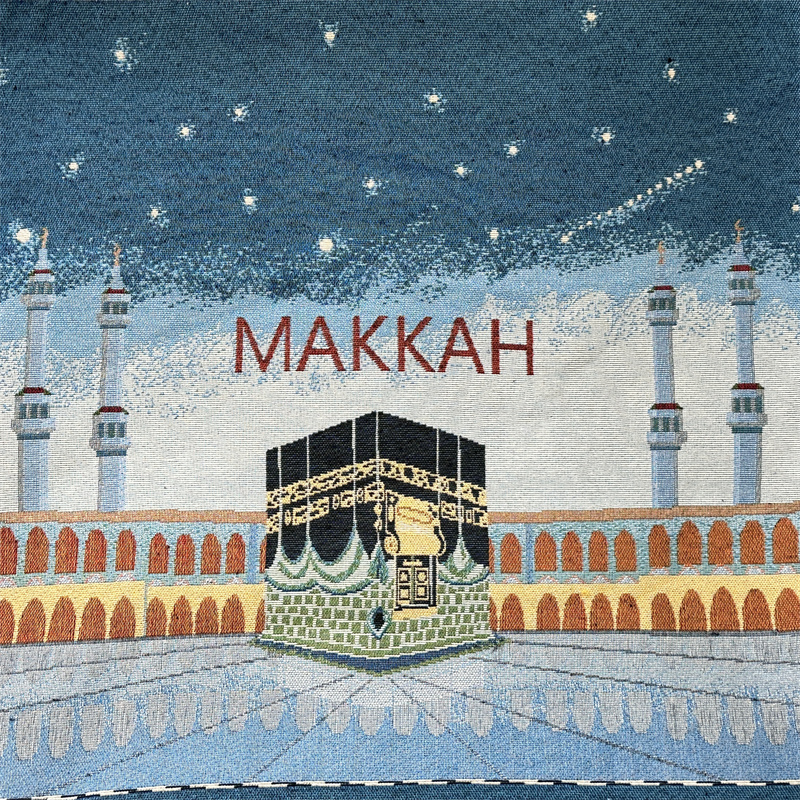
| Tapestry Jacquard | Cotton, Polyester | Upholstery, wall hangings |
| Knit Jacquard | Wool, Cotton, Synthetics | Sweaters, sportswear |
Where Jacquard Fabric Is Used
Because of its versatility, Jacquard fabric appears across a wide range of industries and product categories. In fashion, it is frequently used for jackets, dresses, skirts, and accessories where a textured, patterned surface adds visual interest without the need for printing. In home décor, Jacquard textiles are a popular choice for curtains, cushion covers, bedspreads, and upholstery fabric, largely because the woven pattern holds up well to repeated use and cleaning.
Jacquard is also widely used in the production of ties, scarves, and formal accessories, where fine detail and a subtle sheen are desirable. In the automotive industry, Jacquard-woven textiles are sometimes used for seat covers due to their durability and ability to incorporate branded or decorative patterns directly into the seat surface.
Advantages and Disadvantages of Jacquard Fabric
Advantages
- Durability: Patterns are woven into the fabric structure, so they do not crack, peel, or fade the way printed designs can.
- Texture and depth: The raised or layered weave gives a tactile, dimensional quality that flat prints cannot replicate.
- Versatility: It can be produced in countless fiber blends, weights, and finishes to suit different applications.
- Reversibility: Many Jacquard weaves display a coordinating pattern on both sides, making the fabric practical for certain garment and home applications.
Disadvantages
- Higher cost: The complexity of the weaving process typically makes Jacquard fabric more expensive than printed or plain-woven textiles.
- Weight and stiffness: Some Jacquard weaves, particularly brocades, can be heavier and less flexible than lighter fabrics.
- Care requirements: Certain Jacquard textiles, especially those made with silk or metallic threads, may require specialized cleaning methods.
How to Care for Jacquard Fabric
Proper care extends the life and appearance of Jacquard textiles significantly. Because the fiber content and finish can vary widely, it is important to check the care label before cleaning any Jacquard item. As a general guideline, cotton and polyester Jacquard fabrics can often be machine washed on a gentle cycle with cold water, while silk or metallic thread Jacquards typically require dry cleaning or hand washing to prevent damage to delicate fibers.
When ironing Jacquard fabric, it is best to turn the item inside out and use a lower heat setting, since direct high heat can flatten the raised texture that gives the fabric its distinctive character. For upholstery and home textiles, regular vacuuming with a soft brush attachment helps prevent dust from settling into the woven pattern, preserving both the color and texture over time.
Choosing the Right Jacquard Fabric
When selecting Jacquard fabric for a specific project, it helps to consider three main factors: fiber content, weight, and intended use. For garments that require drape and movement, a lighter cotton or silk-blend Jacquard is usually preferable. For upholstery or drapery, a heavier cotton or polyester Jacquard offers better durability and resistance to wear. Buyers should also examine the tightness of the weave, as a denser weave generally indicates higher quality and greater longevity.
Testing a fabric sample before committing to a large purchase is a practical way to evaluate how it drapes, feels, and holds color. This step is particularly useful for large-scale projects such as curtains or furniture reupholstering, where fabric performance has a lasting impact on the finished result.