

 中文简体
 Español
Content
- 1 What "Like Silk" Actually Means
- 2 The Main Families of Silk-Like Fabrics
- 3 The Synthetic Route: Polyester and Acetate
- 4 The Weave Matters as Much as the Fibre
- 5 Regenerated and Plant-Based Options
- 6 Texture: When Silk-Like Should Not Be Smooth
- 7 How to Choose: A Practical Checklist
- 8 Performance, Care and Real-World Wear
Ask ten people why they are hunting for fabrics like silk and you will get ten different answers. One wants the fluid drape without a dry-cleaning bill. Another loves the sheen but would rather not work with animal fibre. A third just needs something that catches the light like silk on a shop rail and still survives a wash cycle. After years of weaving and sourcing cloth in Tongxiang, the question we hear most is rarely "what is the closest match to silk?" It is usually "which silk-like fabric is right for what I am making?" That is a far more useful question, and it is the one this guide sets out to answer.
What "Like Silk" Actually Means
Silk gets its reputation from a combination of qualities that rarely appear together in one cloth. Understanding which of them you actually need will narrow your options faster than any fibre chart. There are four that matter most:
- Lustre. The soft, directional glow that moves as the fabric moves, rather than the flat shine of a coated surface.
- Drape. The way the cloth falls and folds under its own weight, without stiffness or a papery edge.
- Hand. That cool, smooth, slightly slippery touch in the first second of contact.
- Weight. Silk is traditionally measured in momme, while most other fabrics are quoted in grams per square metre. Roughly, 19 momme sits near 80 gsm, so a silk-like cloth at 60 to 100 gsm will behave closest to a lightweight silk.
Once you know whether you are chasing shine, drape, touch or weight, the choice becomes much simpler. Many disappointing "silk alternatives" fail because the buyer optimised for lustre and forgot about drape.
The Main Families of Silk-Like Fabrics
Broadly, silk-like fabrics come from three routes: synthetic filament yarns, regenerated cellulose, and plant fibres finished to look smoother. The table below gives a starting comparison, though the weave can change the result as much as the fibre does.
| Fibre family | Hand and feel | Lustre | Drape | Everyday care |
|---|---|---|---|---|
| Fine multifilament polyester | Smooth, springy, on the dry side | High and tunable | Good, holds shape well | Machine wash cool, low iron |
| Acetate | Cool and very smooth | High, glassy | Excellent, very fluid | Dry clean or careful hand wash |
| Viscose and rayon | Soft, cool, faintly damp | Medium | Excellent | Gentle wash, some shrinkage |
| Modal and lyocell | Silky-smooth, strong when wet | Medium to low | Excellent | Machine wash gentle |
| Mercerised cotton | Crisp with a faintly dry touch | Medium in sateen weaves | Moderate | Machine wash, very easy |
| Cupro | Very soft, almost peach-skin | Soft and low | Excellent | Gentle wash or dry clean |
The Synthetic Route: Polyester and Acetate
Polyester is the workhorse of the silk-like category, and it is often misunderstood. A coarse, dull polyester will always look like polyester. A fine multifilament yarn with a bright or trilobal cross-section behaves quite differently: the flat surfaces of the filament reflect light in a way that reads as silk rather than plastic. Add a satin weave and the effect becomes convincing at arm's length.
What polyester brings is durability, colour fastness and shape retention that silk itself cannot match. It resists creasing, holds a pleat, and washes without drama. The trade-off is breathability, which varies enormously with yarn count and weave density. Acetate sits at the other end: gorgeous fluid drape and a cool, glassy surface, but it is delicate, sensitive to heat and usually needs dry cleaning. For a silk-look fabric that has to survive real life, fine polyester is usually the safer bet.
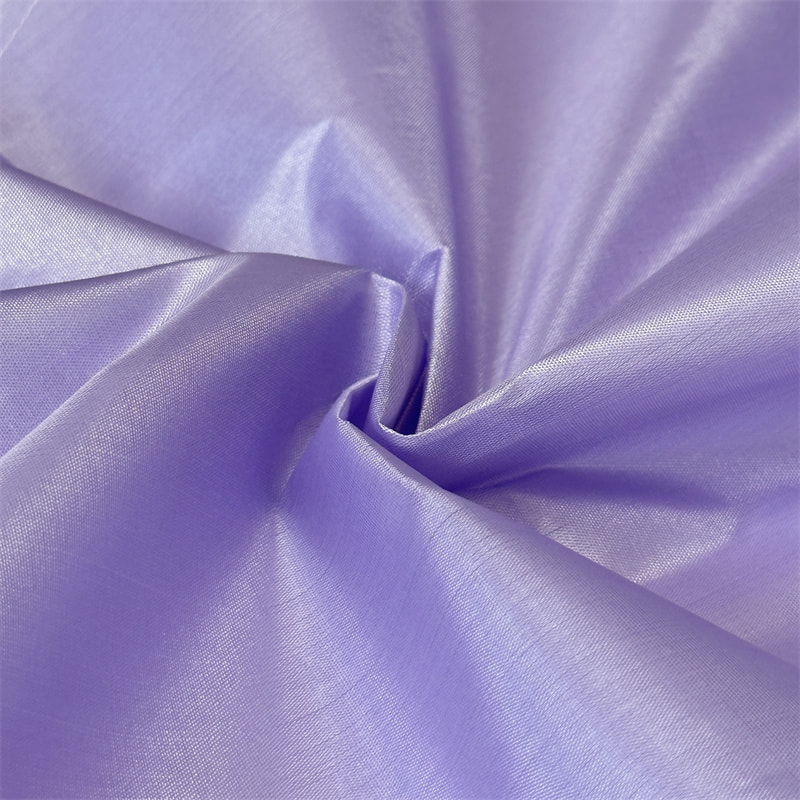 Imitation Silk Fabrics with a Practical Silk-Look FinishFine polyester silk-look fabrics balancing drape, durability and easy care for dresses, blouses, curtains and event décor.View Product →
Our own imitation silk range is built on exactly this logic, using fine filament yarns and a weave structure chosen for drape rather than maximum shine.
The Weave Matters as Much as the Fibre
Here is the point that trips up a lot of buyers: satin is not a fibre. Silk is a fibre; satin is a weave structure in which warp floats pass over several weft picks, leaving the face smooth and reflective and the back matte. You can weave satin from silk, polyester, viscose or cotton. That is why two fabrics with the same fibre content can look completely different.
Sateen is the cotton cousin of satin, usually with longer, softer yarns and a slightly drier, more matte finish. It is a good choice when you want softness and a little sheen without the slippery, high-glare surface of a true satin. For eveningwear, linings and anything that needs to flow, a satin construction is hard to beat.
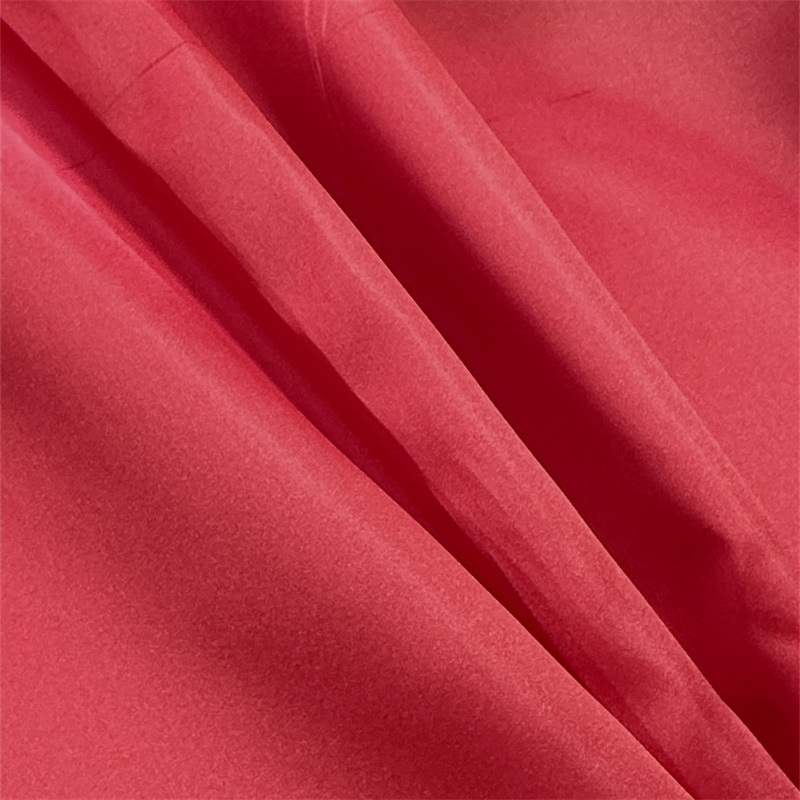 Satin Fabrics for Eveningwear, Linings and Home DécorHigh-gloss satin in silk, polyester or nylon, offering fluid drape for evening gowns, curtains and wedding decorations.View Product →
Satin constructions are where we see the biggest difference between an ordinary silk substitute and one that genuinely drapes well.
Regenerated and Plant-Based Options
Viscose, rayon, modal and lyocell are all made from wood pulp and share a soft, cool, gently lustrous character. They breathe better than most synthetics and drape beautifully, which makes them popular for dresses, blouses and linings. The compromises are real, though: viscose loses strength when wet and can shrink, so wash temperatures and drying methods matter. Lyocell is the more robust member of the family and handles machine washing considerably better.
On the plant side, mercerised cotton is the classic route to a silk-like surface. The caustic treatment swells and straightens the fibre, boosting lustre and dye uptake, and the result is crisp rather than fluid. Niche fibres such as lotus, pineapple and soy have their own charm, but availability, price and consistency make them difficult for volume production. They are wonderful for small, special projects and frustrating for anything with a delivery deadline.
Texture: When Silk-Like Should Not Be Smooth
Not every silk look is glossy. Crepe effects, with their lightly pebbled surface and matte-reflective mix, read as sophisticated rather than shiny. Jacquard is another route: by lifting part of the pattern above the ground cloth, a woven design can catch light selectively, producing depth that a flat satin simply cannot offer. Woven from fine filament yarns, a jacquard gives you silk-like highlights with structure and body.
 Jacquard Fabrics with Silk-Like Highlights and Woven DepthPatterned jacquard fabrics with soft texture, drape and selective sheen for dresses, cushions, curtains and upholstery.View Product →
Jacquard is a useful middle ground when you want the gleam of silk but need a fabric with more weight and pattern interest.
How to Choose: A Practical Checklist
Before you commit to a base cloth, run through these questions. They usually settle the decision in a few minutes.
- What does the garment or product need to do? Fluid drape, crisp structure and abrasion resistance pull you toward different fibres.
- What weight suits the construction? Lightweight for gatherings and linings, mid-weight for dresses and shirts, heavier for upholstery and structured pieces.
- How shiny should it be? Decide between high-gloss satin, soft sateen sheen and a matte crepe finish.
- How will it be cleaned? If machine washing is non-negotiable, polyester and lyocell move to the front of the queue.
- How will it be dyed or printed? Fibre type dictates the dye class, and that affects colour depth and fastness.
- Order a swatch and test it. Cut, sew, wash and iron a small piece; ten minutes of testing prevents a very expensive mistake.
Performance, Care and Real-World Wear
Silk-like fabrics respond well to sensible care. Wash cool and gently, avoid wringing, dry away from direct sun, and iron on a low setting with a pressing cloth. Satin surfaces mark easily with a hot iron, so press on the reverse. If you need more from the cloth than aesthetics, finishing treatments can add stain resistance or UV protection without dulling the surface, which is worth discussing with your supplier before production begins. You can read more about how these finishing treatments change the behaviour of imitation silk on our technical notes page.
The honest summary is that there is no single best silk alternative. Fine polyester wins on durability and cost, acetate and cupro win on drape, lyocell and viscose win on breathability, and mercerised cotton wins on easy care. Match the fibre and weave to the job in front of you, test a swatch, and the fabric will do exactly what you need it to. If you would like to see what we hold in stock and how our constructions compare in the hand, take a look at our fabric range or send us a sample request with your specification.