

 中文简体
中文简体 Español
Content
What Is Satin Fabric, How Is It Made, and What Are the Different Types?
Satin is one of the most instantly recognisable fabrics in fashion and interior design — glossy on the surface, smooth to the touch, and associated with luxury in almost every culture. Yet for something so widely used, it is also widely misunderstood. Many people assume satin refers to a specific fibre, like silk, when in fact it describes a method of weaving. Understanding what satin actually is, how it is produced, and which types exist for different applications makes it far easier to buy the right fabric, care for it properly, and use it with intention.
What Is Satin Fabric?
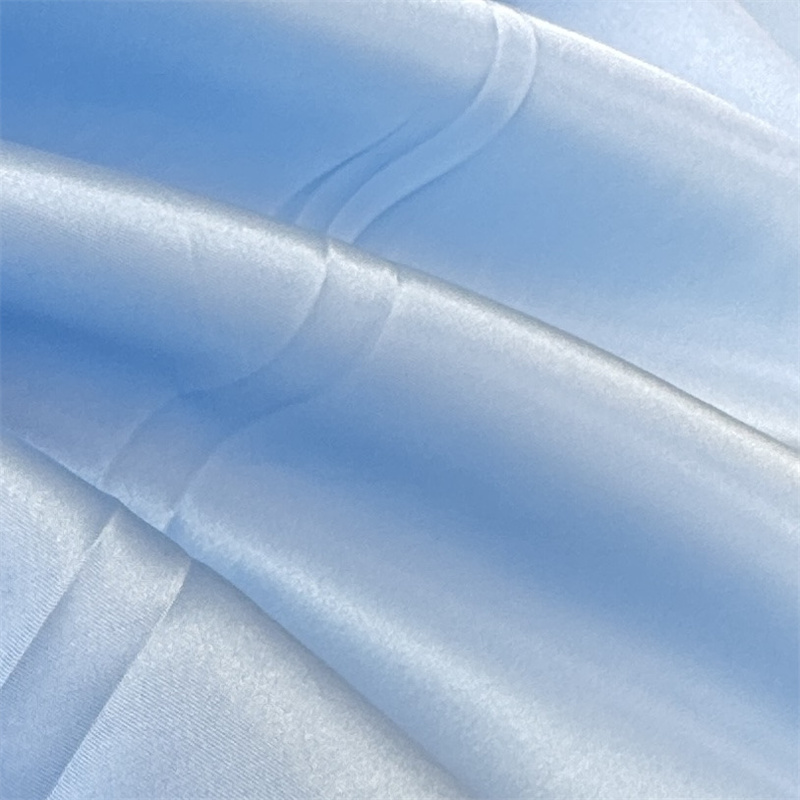
Satin is a weave structure, not a fibre. It is defined by the way threads are interlaced on a loom, producing a fabric with a high-gloss face and a dull, matte back. In a standard plain weave, warp threads (running lengthwise) and weft threads (running crosswise) alternate over and under each other in equal measure, creating a balanced and relatively rough texture. Satin weave works differently: warp threads pass over multiple weft threads before interlacing, with fewer contact points overall. This long float of thread across the surface is what creates the characteristic shine.
The smoothness of satin comes from the fact that fewer interlacings mean fewer interruptions in the thread surface. Light reflects off those long, unbroken threads in a consistent direction, producing the lustrous sheen that satin is known for. The trade-off is that fewer interlacings also mean less structural stability — satin fabrics can snag more easily than plain weaves and may require more careful handling. The fibre used to create satin — silk, polyester, nylon, acetate, or others — determines much of its quality, feel, and price, but the defining characteristic of satin is always the weave.
How Is Satin Made?
The satin weave is produced on a loom using one of several structural configurations, most commonly the four-shaft, five-shaft, or eight-shaft satin weave. The number refers to how many threads the floating warp passes over before interlacing with a weft thread. An eight-shaft satin, for example, has warp threads floating over seven weft threads before interlacing with one, producing an exceptionally smooth and reflective surface. The higher the shaft count, generally the more lustrous and delicate the resulting fabric.
After weaving, satin fabric often undergoes finishing treatments that enhance its appearance and performance. These can include calendering — passing the fabric through heated rollers to compress and smooth the surface — or chemical treatments to improve resistance to creasing and moisture. Dyeing satin requires careful technique because the reflective surface can make uneven dye uptake more visible than it would be on a matte fabric. High-quality satin is typically piece-dyed or yarn-dyed before weaving to achieve consistent, deep colour.
The Main Types of Satin Fabric
Because satin is a weave rather than a material, it exists in a wide range of types determined by the base fibre, thread count, and finishing method. Each type has distinct properties that make it better suited to certain uses over others.
Silk Satin
Silk satin is the original and most prized form of the fabric. It uses natural silk filaments as the base fibre, which are themselves smooth and lustrous before weaving begins. The combination of silk's natural sheen and the satin weave produces a fabric of extraordinary depth and luminosity that synthetic versions attempt to replicate but rarely match. Silk satin drapes beautifully, feels cool against the skin, and is breathable in a way that polyester satin is not. It is also significantly more expensive, more delicate, and requires dry cleaning or very careful hand washing.
Polyester Satin
Polyester satin is the most commonly used form of satin in mainstream fashion, bridal wear, and home textiles. It replicates the high-gloss surface of silk satin at a fraction of the cost and is considerably more durable and easier to care for. The main drawbacks are that polyester satin does not breathe well, can feel less luxurious against the skin, and has a slightly more artificial-looking shine compared to silk. It is, however, highly colour-fast, resistant to wrinkles, and machine washable in most cases, making it the practical choice for high-volume applications.
Charmeuse
Charmeuse is a lightweight satin-weave fabric with an exceptionally fluid drape and a semi-lustrous finish that is slightly softer in sheen than standard satin. It can be made from silk or polyester, with silk charmeuse being a staple of high-end lingerie, blouses, and eveningwear. The fabric is knitted with a different float arrangement than traditional satin, resulting in a more pliable structure that clings gently to the body. Charmeuse is considered one of the most flattering fabrics for draped garments precisely because of this combination of lightness and fluidity.
Duchess Satin
Duchess satin is a heavyweight, structured form of satin with a firm hand and a high-gloss finish. It has little drape compared to charmeuse or standard satin, instead holding its shape rigidly — a property that makes it ideal for structured bridal gowns, ballgowns, and formal eveningwear where volume and silhouette are priorities. Duchess satin is typically made from silk, acetate, or polyester, and its weight means it resists creasing better than lighter satin varieties. The tradeoff is that it can feel stiff and heavy to wear for extended periods.
Satin Crepe
Satin crepe is a reversible fabric that combines a satin face on one side with a crepe texture on the other. This makes it more versatile than standard satin, as it can be used either way depending on the desired finish. The crepe side provides a matte, slightly textured surface that is easier to sew and less prone to showing handling marks, while the satin side retains the expected lustre. Satin crepe is popular in eveningwear and tailored garments where a subtle, less overtly shiny finish is preferred alongside elegant drape.
| Satin Type | Common Fibre | Weight | Best Uses |
| Silk Satin | Silk | Light–Medium | Luxury fashion, lingerie, scarves |
| Polyester Satin | Polyester | Light–Medium | Bridal, lining, home textiles |
| Charmeuse | Silk or Polyester | Very Light | Blouses, lingerie, draped gowns |
| Duchess Satin | Silk, Acetate, Polyester | Heavy | Bridal gowns, ballgowns, corsets |
| Satin Crepe | Silk or Polyester | Medium | Eveningwear, tailored dresses |
Common Uses of Satin Across Industries
Satin's applications extend well beyond fashion. Its combination of visual appeal, smooth surface, and variable weight makes it a practical choice across several industries. In fashion, satin appears in eveningwear, bridal collections, lingerie, blouses, linings, and accessories. Bridal use in particular relies heavily on duchess and polyester satin for its ability to hold structured silhouettes while maintaining a formal, refined surface.
In home textiles, satin weave is used for bed sheets and pillowcases — often marketed as "satin" or "sateen" depending on whether warp or weft threads dominate the surface float. Satin pillowcases have gained particular attention in skincare and haircare communities because the smooth surface creates less friction than cotton, reducing sleep creases on the face and breakage in hair, especially for curly or textured hair types. Interior design also uses satin for curtains, cushion covers, and decorative upholstery where a degree of sheen is desired without the full reflectivity of silk.
How to Care for Satin Fabric
Care requirements for satin vary significantly depending on the base fibre. Silk satin should almost always be dry cleaned or hand washed in cold water with a mild detergent, laid flat to dry away from direct sunlight, and ironed on the lowest setting through a pressing cloth. It is highly susceptible to water marks, so any wet treatment must be even and gentle. Polyester satin is more forgiving and can typically be machine washed on a delicate cycle in a mesh laundry bag, though tumble drying should be avoided as heat can distort the weave.
For all satin types, a few universal care principles apply:
- Avoid harsh detergents: Strong surfactants strip the finish from satin fibres, dulling the characteristic sheen over time.
- Never wring or twist: Wringing distorts the weave structure and can cause permanent creasing or shape loss in delicate satin.
- Store flat or rolled: Hanging satin garments for extended periods can cause the fabric to stretch, especially along the bias grain.
- Iron on reverse: Ironing the glossy face of satin directly can flatten the weave and leave permanent shiny marks. Always iron on the reverse side or use a pressing cloth.
- Use padded hangers if hanging: Wire hangers can leave indentation marks on the shoulders of satin garments that are visible on the reflective surface.
Satin vs. Sateen: Understanding the Difference
Satin and sateen are frequently confused because they are structurally similar, but there is a meaningful distinction. Satin weave uses filament fibres — continuous, long strands like silk or synthetic threads — with the warp threads creating the surface float. Sateen weave uses spun fibres — typically short-staple cotton — with the weft threads creating the surface float instead. The result is that sateen has a softer, slightly less brilliant sheen than satin and a more cotton-like feel, making it popular for bed linen where the goal is comfort alongside a degree of lustre. Satin, by contrast, tends to be crisper and shinier, and is preferred where visual impact is the priority.
When shopping for bedding or fabric, the label "sateen" typically signals a cotton-based product with a satin-style weave, while "satin" without further specification usually implies a synthetic or silk filament base. Neither is inherently superior — the right choice depends entirely on the intended use, budget, and whether softness or sheen is the more important quality.