

 中文简体
中文简体 Español
Content
- 1 What Is Positioned Jacquard Fabric?
- 2 How Positioned Jacquard Fabric Is Produced
- 3 Key Differences Between Positioned and Repeat Jacquard Fabric
- 4 Fiber and Construction Options for Positioned Jacquard
- 5 Applications Where Positioned Jacquard Adds the Most Value
- 6 Practical Considerations When Sourcing Positioned Jacquard Fabric
- 7 Why Positioned Jacquard Is Worth the Investment
What Is Positioned Jacquard Fabric?
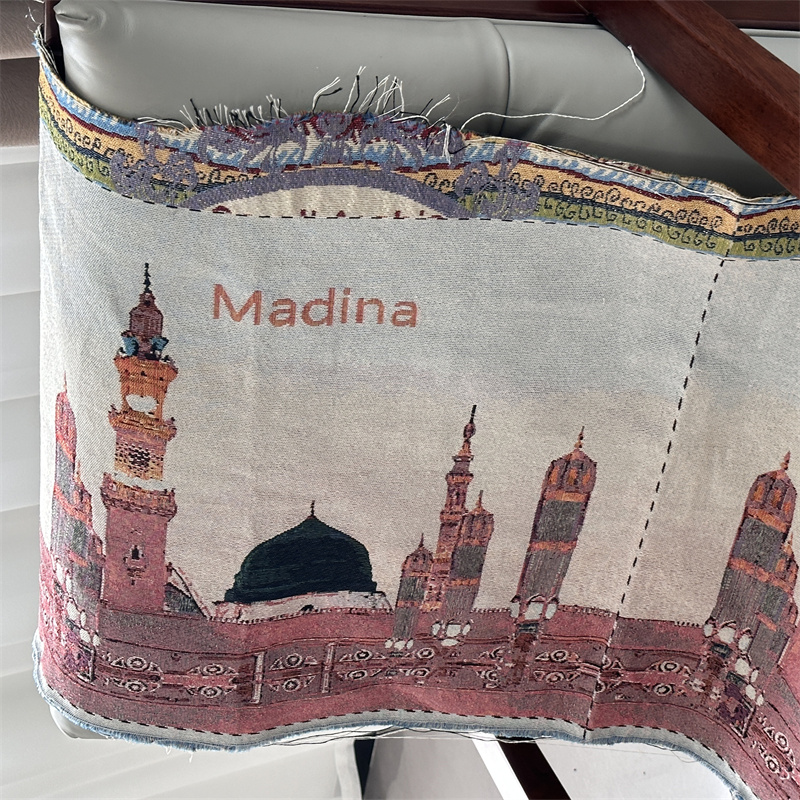
Positioned jacquard fabric is a specialized category of woven textile in which decorative motifs, patterns, or imagery are intentionally woven into exact, predetermined locations on the fabric surface rather than repeated continuously across the entire cloth. Unlike standard jacquard fabric — where a pattern tiles or repeats at regular intervals throughout the roll — positioned jacquard places a specific design element at a fixed point: the center of a cushion panel, the chest of a garment, the back of a jacket, or the corner of a scarf. This precision placement is engineered directly into the weaving process using a jacquard loom programmed to execute the pattern only at designated coordinates within each repeat unit of the fabric.
The term "positioned" is therefore not about the aesthetic style of the pattern itself but about the deliberate spatial relationship between the motif and the finished product it is destined for. A positioned jacquard fabric is essentially a fabric pre-engineered for a specific cut-and-sew outcome, where the weaver and the product designer have collaborated to ensure that when the fabric is cut at defined lines, the resulting piece will carry the intended design exactly where it was planned to appear. This level of intentionality makes positioned jacquard one of the most technically demanding and visually impactful categories in textile production.
How Positioned Jacquard Fabric Is Produced
The production of positioned jacquard fabric relies on the jacquard loom — a weaving system invented in the early nineteenth century by Joseph Marie Jacquard and now operated through sophisticated computer-controlled mechanisms. The jacquard loom independently controls each individual warp thread across the width of the fabric, allowing it to raise or lower any combination of threads on any given pick (weft insertion). This independent thread control is what makes complex, non-repeating patterns achievable in woven cloth — something impossible on conventional shaft looms that control threads in groups.
Programming the Loom for Placement Precision
To create a positioned jacquard, the fabric designer works in specialized textile CAD software to map not just the pattern itself but its precise location within a defined fabric repeat unit — which must correspond to the dimensions of the intended finished product. For example, if the final product is a 50cm × 50cm cushion cover, the loom is programmed with a repeat unit of exactly 50cm × 50cm, with the decorative motif positioned centrally within that unit. The loom then reproduces this programmed repeat continuously down the length of the fabric roll, ensuring that every repeat — and therefore every panel cut from the roll — contains the motif in exactly the correct position.
Alignment and Registration Marks
Positioned jacquard fabric is typically woven with registration marks or clearly visible borders at the edges of each repeat unit to assist cutters in aligning their cuts accurately. These marks may be woven lines, color changes at the selvedge, or subtle pattern elements that indicate where one panel ends and the next begins. Proper alignment during cutting is essential — even a few centimeters of misalignment can shift the motif visibly off-center in the finished product, undermining the entire purpose of the positioned design. High-volume production facilities use laser-guided or camera-assisted cutting systems to maintain consistent registration across thousands of panels.
Key Differences Between Positioned and Repeat Jacquard Fabric
Understanding what sets positioned jacquard apart from standard repeat jacquard helps buyers, designers, and manufacturers select the right fabric type for their specific application. The two categories serve fundamentally different design and production purposes.
| Feature | Standard Repeat Jacquard | Positioned Jacquard |
| Pattern Distribution | Continuous repeat across the full roll | Fixed motif at defined locations only |
| Design Intent | Surface decoration across any cut size | Precise motif placement on finished product |
| Cutting Complexity | Flexible — cut anywhere along the roll | Must cut at exact registration points |
| Fabric Waste | Lower — efficient layout possible | Higher — cutting must respect repeat boundaries |
| Production Cost | Lower per meter | Higher due to programming and precision |
| Visual Impact | Textural and all-over decorative | Focal, intentional, product-centered |
| Best Applications | Upholstery, drapery, apparel yardage | Cushions, scarves, garment panels, bags |
Fiber and Construction Options for Positioned Jacquard
Positioned jacquard fabric can be produced using a wide variety of fiber types and weave structures, each of which contributes a different aesthetic and functional outcome. The choice of fiber significantly affects the drape, sheen, weight, and durability of the finished cloth, while the weave structure determines how richly the pattern is expressed on the surface.
Polyester and Polyester Blends
Polyester is the most widely used fiber in positioned jacquard production because of its excellent dye affinity, dimensional stability, and cost efficiency. Polyester jacquard can be woven with high thread counts that produce fine, sharp pattern definition, and the fiber accepts a wide spectrum of colors with excellent wash and light fastness. Polyester positioned jacquard is common in home furnishings, fashion accessories, and gift products where durability and consistent reproduction across large production runs are priorities.
Silk and Silk-Like Fibers
Silk positioned jacquard is among the most prestigious and visually striking textile products available. The natural luster of silk filaments gives woven motifs a luminous, three-dimensional quality that synthetic fibers struggle to fully replicate. Positioned silk jacquard is used in luxury scarves, high-end neckties, couture garment panels, and collector-quality home textiles. Viscose and cupro are often used as more affordable silk alternatives, offering similar drape and sheen at lower cost while still delivering an elegant finished result.
Cotton and Cotton Blends
Cotton positioned jacquard produces a matte, breathable fabric with a softer, more casual aesthetic than silk or polyester versions. It is commonly used for cushion covers, table linens, tote bags, and casual apparel where comfort and natural fiber feel are important. Cotton jacquard is also well-suited to embossed or tone-on-tone positioned designs where the pattern is expressed through weave structure variation rather than color contrast.
Applications Where Positioned Jacquard Adds the Most Value
The additional cost and production complexity of positioned jacquard fabric is justified when the design intent requires a specific visual focal point on the finished product. In these applications, the difference between positioned and repeat jacquard is clearly visible and directly contributes to the perceived value of the item.
Cushion Covers and Decorative Pillows
Positioned jacquard is perhaps most widely used in the cushion cover category. A centrally positioned floral, geometric, or brand motif on a cushion panel creates a product that looks designed and intentional rather than arbitrarily cut from a repeating pattern. Premium home furnishing brands frequently use positioned jacquard to create signature cushion designs that serve as recognizable brand identifiers across their product ranges.
Scarves and Shawls
In the luxury accessories market, positioned jacquard scarves are a staple of high-end fashion houses. A bordered design with a central positioned motif — such as a crest, animal figure, or abstract composition — woven in silk jacquard creates a scarf that reads as a complete, gallery-quality textile object rather than simply a length of decorated cloth. The positioning ensures that when the scarf is folded or draped, the key design elements remain visible and properly oriented.
Apparel Panels and Garment Details
Fashion designers use positioned jacquard to create garment components with built-in decorative focus points — a woven chest badge on a bomber jacket, a floral panel at the back of a dress, or a decorative band at the hem of a skirt. These applications make the weaving process part of the design statement itself, adding a layer of craft and luxury that embroidered or printed alternatives cannot replicate with the same subtlety and durability.
Branded and Promotional Textiles
Corporate gifting, branded merchandise, and promotional textile products represent a growing market for positioned jacquard. Neckties, pocket squares, tote bags, and notebook covers with a company logo or signature pattern woven into a fixed position convey quality and permanence that printed branding cannot match. Because the design is woven rather than applied to the surface, it cannot peel, crack, or fade with use — making it a compelling long-term brand investment.
Practical Considerations When Sourcing Positioned Jacquard Fabric
Sourcing positioned jacquard fabric requires closer collaboration with your supplier than standard fabric procurement. Because the fabric is engineered for a specific finished product dimension, errors in specification at the design stage are difficult and expensive to correct once weaving has begun. Working through the following considerations carefully before placing an order will help ensure a successful outcome.
- Confirm finished product dimensions before design: The repeat unit of the positioned jacquard must be finalized based on the exact dimensions of the finished cut panel, including seam allowances. Any change to product size after the loom program has been set will require reprogramming and potentially a new weaving trial.
- Request a weaving sample (strike-off): Before approving full production, always request a woven sample showing the positioned motif in context. Color, scale, and sharpness of detail can differ between the digital design file and the actual woven result, particularly with fine details or gradients.
- Plan for higher fabric consumption: Because cutting must respect the boundaries of each positioned repeat, fabric yield per meter is lower than for unrestricted cutting layouts. Work with your supplier to calculate accurate consumption figures before budgeting material costs.
- Specify cutting and registration requirements clearly: Provide your cutting team or CMT supplier with a clear diagram showing where registration marks appear on the fabric and exactly how panels should be aligned before cutting. Ambiguity at the cutting stage is a common source of waste and rework in positioned jacquard production.
- Minimum order quantities: Positioned jacquard typically carries higher minimum order quantities than standard fabric due to the cost of loom setup and programming. Discuss MOQ requirements with your supplier early to confirm alignment with your production volume.
- Intellectual property considerations: If the positioned design incorporates proprietary brand elements, logos, or original artwork, ensure that your supplier agreement includes appropriate IP protection clauses to prevent unauthorized reuse of the loom program for third-party orders.
Why Positioned Jacquard Is Worth the Investment
Positioned jacquard fabric commands a premium over standard repeat jacquard and printed alternatives for good reason. The combination of precise design placement, the inherent prestige of woven construction, and the durability of a pattern that is structurally part of the cloth rather than applied to its surface creates a product that communicates quality at every level — from the tactile experience of handling the fabric to the visual sophistication of the finished item. For brands and designers who want their textiles to make a statement that printing or embroidery simply cannot match, positioned jacquard remains one of the most powerful tools available in the textile design toolkit.
As digital jacquard loom technology continues to advance, the barrier to entry for custom positioned jacquard production is gradually lowering — with faster programming, more flexible minimum quantities, and improved color reproduction making this specialized fabric type accessible to a broader range of product developers and designers than ever before. For any application where the exact placement of a woven motif on a finished product is central to the design vision, positioned jacquard fabric is not merely a luxury — it is the only solution that fully delivers on that intent.