

 中文简体
中文简体 Español
Content
- 1 What Makes Jacquard Fabric Different from Other Woven Textiles
- 2 How the Jacquard Weaving Process Actually Works
- 3 Common Fiber Combinations Used in Jacquard Production
- 4 Distinguishing Jacquard from Brocade, Damask, and Matelasse
- 5 Practical Applications Across Fashion and Home Decor
- 6 Evaluating Jacquard Quality Before Purchasing
- 7 Caring for Jacquard Fabric to Preserve Its Pattern
- 8 Choosing the Right Jacquard for Your Project
What Makes Jacquard Fabric Different from Other Woven Textiles
Jacquard fabric is defined not by a specific fiber content but by how its pattern is created directly within the weave structure itself, rather than being printed, embroidered, or dyed onto a plain woven base afterward. Each thread in a jacquard fabric can be individually controlled during weaving, allowing complex, detailed patterns, from intricate florals to geometric motifs and even photographic-style images, to emerge as part of the fabric's actual structure. This gives jacquard a distinctive depth and dimensionality that printed patterns cannot replicate, since the design is visible on both faces of the fabric, often in reversed colors or a raised, textured relief.
The technique takes its name from Joseph Marie Jacquard, who developed a punch-card control mechanism for looms in the early nineteenth century that allowed individual warp threads to be raised or lowered independently according to a programmed pattern. This innovation, one of the earliest forms of programmable machinery, made it possible to weave far more complex designs at a production scale that hand-weaving could never achieve economically, and modern computerized jacquard looms still operate on the same fundamental principle today.
How the Jacquard Weaving Process Actually Works
In a jacquard loom, each warp thread passes through its own individually controlled harness, connected to a mechanism that can raise or lower that specific thread independently of all the others during each pass of the weft shuttle. This is fundamentally different from a standard loom, where warp threads are grouped into a small number of harnesses that all move together, limiting the complexity of patterns that can be produced to simple repeating structures like plain weave, twill, or basic stripes.
Modern jacquard looms use computer-controlled electromagnetic or pneumatic mechanisms to control each warp thread, having replaced the original punch-card system with digital pattern files that can be designed and adjusted using specialized textile software. This digital control allows manufacturers to produce highly detailed, large-scale repeating patterns with far greater precision and design flexibility than the original mechanical punch-card looms ever offered, while still relying on the same core concept of individual thread control that Jacquard pioneered.
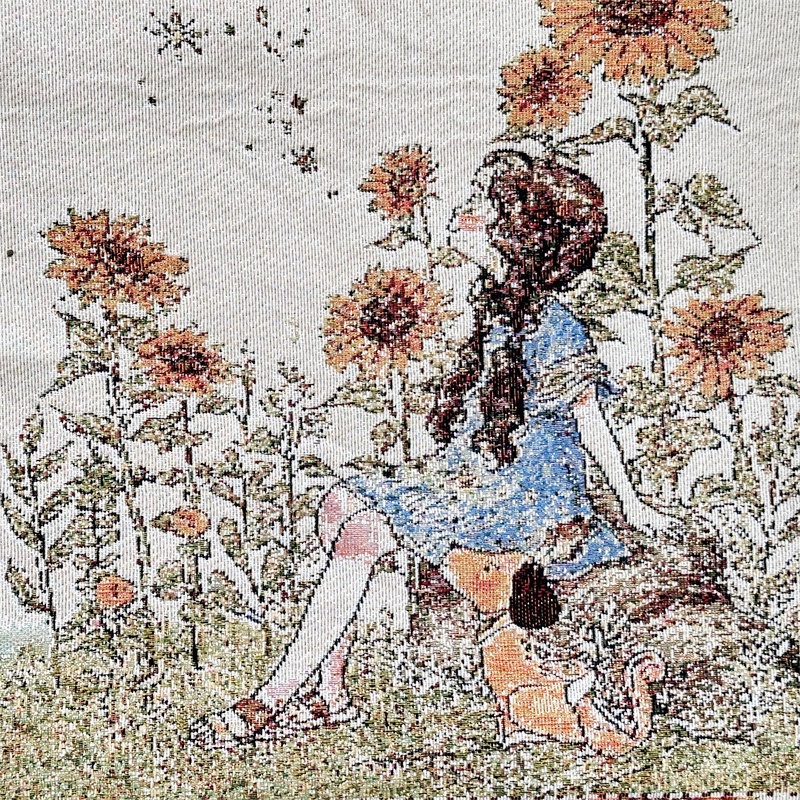
Key Elements of the Weaving Process
- Individual harness control for each warp thread
- Digital pattern files replacing traditional punch cards
- Electromagnetic or pneumatic actuators controlling thread lift
- Multiple weft colors woven simultaneously to build complex designs
- Pattern repeat size limited by the loom's harness capacity
Common Fiber Combinations Used in Jacquard Production
Jacquard fabric can be produced from nearly any fiber suitable for weaving, and the specific fiber choice significantly affects the finished fabric's weight, drape, and appropriate applications. Cotton jacquard is common in home textiles like tablecloths, upholstery, and bedding, offering a durable, easy-care option with good pattern definition and a matte finish that suits everyday household use.
Silk jacquard, historically associated with luxury brocades and damasks, produces an exceptionally lustrous fabric with dramatic pattern depth, making it a favored choice for formal evening wear, high-end upholstery, and decorative wall hangings. Polyester and rayon blends have become increasingly popular in commercial jacquard production, since they replicate much of silk's visual drama at a significantly lower cost while also offering improved durability and easier care for both apparel and home decor applications.
Fiber Choices and Their Typical Applications
| Fiber | Characteristic Look | Common Use |
| Cotton | Matte, durable | Bedding, tablecloths, casual upholstery |
| Silk | Lustrous, dimensional | Formal wear, luxury decor |
| Polyester Blend | Glossy, durable | Commercial upholstery, drapery |
| Wool | Warm, textured | Coats, blankets, winter accessories |
Distinguishing Jacquard from Brocade, Damask, and Matelasse
Several fabric names are often used interchangeably with jacquard, though each actually refers to a specific pattern style produced using jacquard weaving technique rather than a distinct weaving method itself. Brocade refers to jacquard fabric with a raised, embossed appearance, often incorporating metallic threads, that creates a particularly rich and formal visual effect associated with historical and ceremonial textiles. Damask describes jacquard fabric where the pattern and background share the same color but are distinguished through contrasting matte and shiny weave surfaces, most commonly seen in traditional tablecloths and formal drapery.
Matelasse describes a jacquard fabric with a distinctly puffy, quilted appearance created through a double-cloth weaving technique that traps air between two fabric layers during the weaving process, producing a padded texture without any actual internal filling material. Understanding these distinctions helps buyers communicate more precisely with suppliers and better anticipate the specific visual and tactile qualities a given jacquard product will actually deliver.
Practical Applications Across Fashion and Home Decor
Jacquard fabric appears across an unusually wide range of applications precisely because its pattern is woven directly into the structure rather than applied afterward, giving it durability advantages over printed alternatives in high-use settings. Upholstery fabric benefits enormously from jacquard construction, since the pattern will not crack, peel, or fade unevenly the way a printed design can after years of friction and sun exposure on a frequently used sofa or chair.
In fashion, jacquard appears in everything from structured blazers and formal evening gowns to more casual applications like patterned knit sweaters produced on specialized jacquard knitting machines rather than traditional shuttle looms. Home textiles including curtains, table linens, and decorative pillows frequently use jacquard for its ability to convey a sense of quality and craftsmanship that printed fabric alternatives often struggle to match at a similar price point.
Where Jacquard Fabric Commonly Appears
- Upholstery for sofas, chairs, and headboards
- Formal evening wear and structured tailored garments
- Curtains and formal drapery panels
- Table linens including tablecloths and napkins
- Patterned knitwear produced on jacquard knitting machines
Evaluating Jacquard Quality Before Purchasing
When sourcing jacquard fabric, several practical indicators help distinguish higher-quality production from cheaper, less durable alternatives. Thread density and weave tightness matter significantly, since a densely woven jacquard holds its pattern crisply and resists snagging or distortion far better than a loosely woven version, even if both display a similar pattern design at first glance. Examining the fabric's reverse side also reveals useful information, since a well-constructed jacquard typically shows a clean, organized pattern reflection on the back, while poor-quality production often results in loose floating threads or an untidy reverse surface.
Buyers should also request information about the fiber content and any special finishing treatments applied to the fabric, since some jacquard fabrics receive coatings or treatments to enhance sheen or stain resistance, which can affect both the fabric's hand feel and its long-term care requirements. Requesting a physical sample and testing it against the intended end use, whether that means upholstery durability testing or simply checking drape for a garment project, remains the most reliable way to confirm a jacquard fabric will perform as expected.
Quality Indicators to Check
- Tight, dense weave structure with minimal visible gaps
- Clean, organized pattern reflection on the fabric's reverse side
- Consistent color saturation across the full pattern repeat
- Clear fiber content labeling and any special finish disclosures
- Physical sample testing against your specific intended use
Caring for Jacquard Fabric to Preserve Its Pattern
Proper care depends heavily on the specific fiber content of a given jacquard fabric, since cotton, silk, and polyester jacquard each have different sensitivities to heat, moisture, and cleaning chemicals. Cotton jacquard generally tolerates regular machine washing on a gentle cycle, though air drying helps preserve the fabric's pattern definition and prevents the shrinkage that high-heat drying can sometimes cause in tightly woven textiles.
Silk and many polyester jacquards, particularly those used in upholstery or formal garments, generally require professional dry cleaning to avoid distorting the weave structure or dulling the fabric's characteristic sheen. Regardless of fiber type, jacquard fabric should always be ironed on the reverse side when pressing is needed, since direct ironing on the patterned face can flatten the raised texture that gives jacquard its distinctive dimensional appearance.
Choosing the Right Jacquard for Your Project
Selecting the ideal jacquard fabric ultimately comes down to matching fiber content, weave density, and pattern style to your project's specific functional and aesthetic requirements. A durable cotton or polyester blend jacquard suits everyday upholstery and home textiles that need to withstand regular use and cleaning, while silk jacquard remains the better choice for formal garments and decorative pieces where visual luxury takes priority over practical durability.
Before finalizing a large order, request physical samples to evaluate weave density, pattern clarity, and hand feel firsthand, and confirm the manufacturer's recommended care instructions align with how you actually intend to use and maintain the finished product. This careful evaluation helps ensure the distinctive woven pattern that makes jacquard fabric so visually appealing continues looking crisp and well-defined throughout years of regular use.