

 中文简体
中文简体 Español
Content
- 1 What Is Cupro Viscose Fabric?
- 2 How Cupro Viscose Fabric Is Produced
- 3 Cupro and Viscose Side by Side
- 4 Hand Feel, Drape, and Appearance
- 5 Where Cupro Viscose Fabric Is Used
- 6 Blending and Companion Constructions
- 7 What to Confirm Before You Order
- 8 How Our Mill Supports Cupro-Style Briefs
- 9 Common Questions About Cupro Viscose Fabric
Cupro viscose fabric sits in a quiet corner of the textile world. Designers love the way it moves, buyers sometimes puzzle over whether they are holding rayon, silk, or something else entirely, and sourcing teams want to know whether it can be delivered at a workable price and lead time. If you have ever unzipped a well-made jacket and admired the smooth, cool lining inside, there is a fair chance you were looking at cupro.
This guide explains what cupro viscose fabric really is, how it is produced, how it behaves in garment construction, and what to check before placing a bulk order. We will also share how our mill handles cupro-style briefs, since that conversation comes up almost every week.
What Is Cupro Viscose Fabric?
Cupro is short for cuprammonium rayon, a regenerated cellulose fiber. Unlike viscose, which is spun from wood pulp, cupro is made from cotton linters, the short fuzz left on the cottonseed after the long staple fibers have been removed. Those linters are a byproduct of cotton processing, which is why cupro is often described as a fiber that gives a second life to material the cotton industry would otherwise discard.
The phrase "cupro viscose fabric" is used in two different ways in the trade, and it is worth confirming which one your supplier means:
- As a family name: cupro belongs to the same regenerated cellulose group as viscose, modal, and lyocell. Some buyers use "cupro viscose" loosely for any fiber in that family, in the same way "rayon" is used broadly in North America.
- As a blend: a woven or knitted fabric that combines cupro yarns with viscose yarns, usually to balance cost, drape, and hand feel.
In both cases the cloth is cellulosic, breathable, and soft. The differences lie in raw material, spinning chemistry, and the way the finished fabric falls.
How Cupro Viscose Fabric Is Produced
Cupro production begins by dissolving cotton linters in a cuprammonium solution, a copper and ammonia compound. The dissolved cellulose is extruded through a spinneret into a coagulating bath, where it is regenerated into continuous filament yarn. The copper and ammonia are collected and returned to the process, which is why cupro is frequently cited as a low-waste route among the older regenerated cellulose technologies.
Viscose follows a different path. Wood pulp, most often from eucalyptus, beech, or pine, is treated with sodium hydroxide and then carbon disulfide to form cellulose xanthate. That solution is extruded into an acid bath and regenerated as filament or staple fiber. Both are classified as man-made cellulosic fibers, and both depend heavily on mill-level process control for their environmental profile. If sustainability claims matter to your brand, request documentation tied to the specific mill and batch rather than relying on a fiber's general reputation.
One practical difference matters in the design room: cupro is typically produced as filament yarn, a long continuous strand that gives cloth its smooth surface and liquid drape. Viscose comes as both filament and staple, so it can be engineered to feel crisp, matte, or woolly depending on count and blend.
Cupro and Viscose Side by Side
The table below summarizes the traits that come up most often in buyer conversations.
| Property | Cupro | Viscose |
|---|---|---|
| Raw material | Cotton linters | Wood pulp |
| Common fiber form | Filament | Filament and staple |
| Hand feel | Silky, cool, very smooth | Soft, slightly drier |
| Drape and luster | Fluid with subtle sheen | Good drape, matte to soft sheen |
| Moisture absorbency | High | High |
| Strength when wet | Lower than dry | Lower than dry |
| Typical end uses | Linings, blouses, dresses | Dresses, shirts, linings |
Hand Feel, Drape, and Appearance
Cupro earns its reputation on the hand. Because the filament is extremely fine and smooth, the cloth glides over the skin, feels cool at first touch, and falls in soft folds rather than stiff ones. It absorbs moisture well and releases it gradually, so a lined jacket stays comfortable through a long day of wear. Static build-up is low, which matters in dry climates and air-conditioned showrooms.
Dyeing is another strength. Cellulosic filament takes color deeply, so cupro viscose fabric can be dyed to rich, saturated shades without losing its sheen. The same property means shade consistency between lots deserves attention, especially in blends. If you work across several fiber families and want to see how we evaluate moisture-wicking and breathability in other constructions, that article walks through the variables we test.
Where Cupro Viscose Fabric Is Used
Its combination of drape, coolness, and quiet luster makes it a natural fit for garments that sit close to the body or move constantly:
- Jacket, coat, and suit linings, where smoothness helps garments slide on and off
- Blouses, dresses, and skirts that need fluid movement
- Eveningwear and overlays, where a soft sheen catches light without looking metallic
- Scarves, sleepwear, and lingerie, where skin comfort comes first
- Blends with wool, silk, or polyester for suiting and structured separates
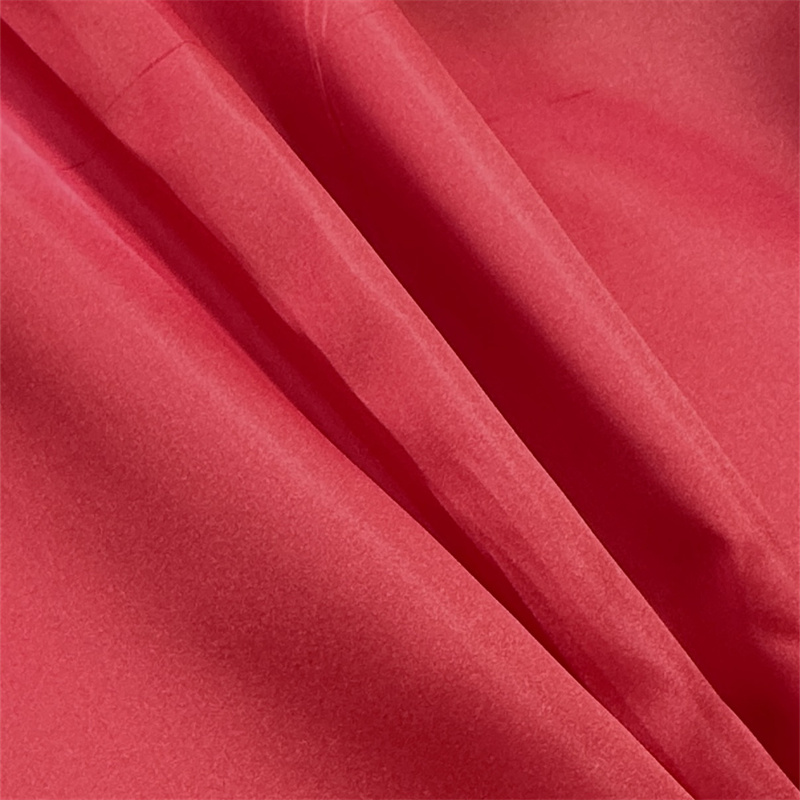 Satin Fabric SuppliersSatin Fabric is a very unique and widely used fabric known for its smooth texture and high gloss. Its satin weave gives the fabric a silky surface texture, making it v...View Product →
Satin constructions are a frequent companion here, because both cupro and satin rely on smooth filament surfaces to create that reflective, fluid character.
Blending and Companion Constructions
Blending is where cupro viscose fabric becomes commercially practical. A percentage of polyester improves dimensional stability and abrasion resistance without destroying the drape. Wool blends give suiting a dry, tailored surface. Cotton or linen-look yarns introduce texture that offsets the fiber's natural gloss.
Many of our customers pair a cupro-style lining with a face fabric chosen for structure and durability. Silk-like weaves are the closest match in hand feel and luster, which is why they appear so often alongside cupro in eveningwear and premium separates.
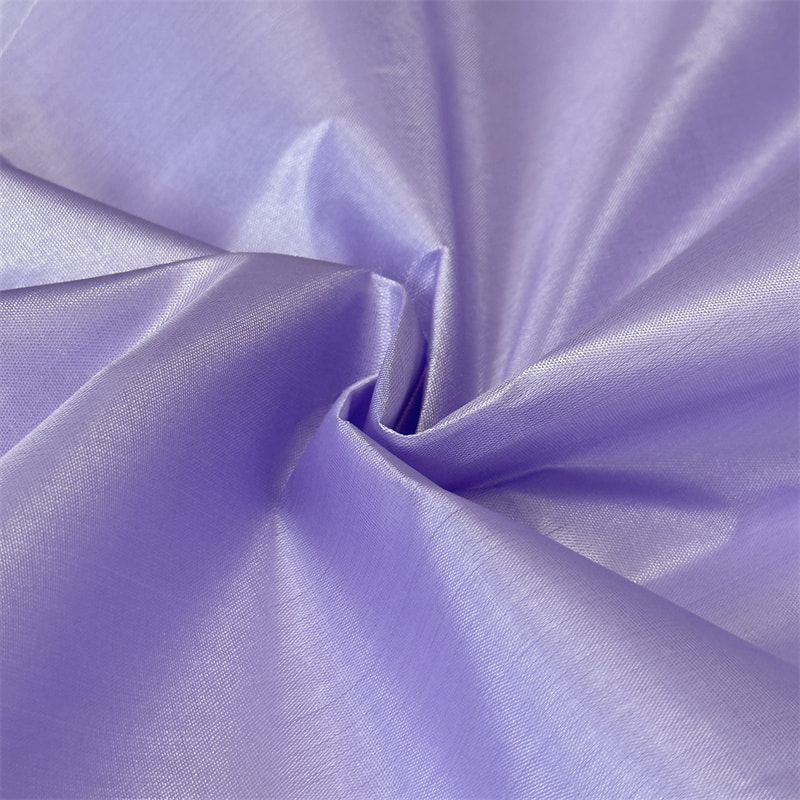 Imitation Silk Fabric ManufacturersImitation Silk Fabric is a very popular synthetic fabric designed to mimic the texture and look of natural silk. Typically made of polyester or nylon, imitation silk n...View Product →
For designs that need surface interest rather than a flat sheen, jacquard structures let us build pattern directly into the weave, so a cupro viscose blend reads as textured rather than simply shiny.
 Jacquard Fabric ManufacturersWEIGHT: 330gsm WIDTH: 148cm MOQ: 1000M/COLOR COMPOSITION: 75% Polyester 15% Cotton 10% Viscose Jacquard fabric is woven by a special jacquard machine with a unique sof...View Product →
What to Confirm Before You Order
A short checklist saves a great deal of time later. Before confirming a cupro viscose order, ask your supplier for the following:
- Exact fiber content by percentage, including whether cupro is filament or staple
- Weight in grams per square meter and usable width in centimeters
- Finishing details such as washing, softening, or calendering
- Shrinkage results from an internal wash test at the intended care temperature
- Colorfastness to washing, rubbing, and light, with test method references
- Minimum order quantity, sampling lead time, and bulk lead time
- Certification documents if your brand makes environmental claims
It also helps to know what else the mill weaves. If you want to see the full picture of what we produce in-house, you are welcome to browse our fabric range and match a face fabric to the lining you have in mind.
How Our Mill Supports Cupro-Style Briefs
Tongxiang Miaoqisi Textile Co., Ltd. is an integrated trade and manufacturing company based in Damazhen, Tongxiang, Zhejiang, and our story began in 2016. We weave, process, and sell fabric for customers worldwide, with a factory covering more than 10,000 square meters, over 200 looms, and daily output above 60,000 meters.
We keep more than 100 fabric varieties in stock, each with over 2,000 meters on hand, so sampling and repeat orders can move quickly. Our strength is not cupro spinning itself; it is the constructions that sit next to it in a collection. When a brief calls for a silk-like hand at a workable cost, or a textured jacquard that holds a pattern, our custom service team can develop the weave with you from the yarn up.
If you would like to discuss a project, reach us at +86-17305847284 or send your specification through the contact form, and we will come back with a construction proposal.
Common Questions About Cupro Viscose Fabric
Is cupro the same as viscose?
No. Both are regenerated cellulose fibers, but cupro is made from cotton linters through the cuprammonium process, while viscose is made from wood pulp through xanthation. Cupro is usually produced as filament yarn, which gives it a silkier surface and a more fluid drape.
Does cupro viscose fabric shrink?
Cellulosic fibers can relax and shrink when exposed to heat and moisture, so some dimensional change is normal. Ask for a wash test at the care temperature you plan to recommend, and specify pre-shrunk finishing if the garment needs tight tolerances.
Is cupro viscose fabric biodegradable?
Because the fiber is cellulose-based, it is generally considered biodegradable under suitable conditions. Finishes, dyes, and blend percentages all influence the outcome, so treat broad biodegradability claims with care and rely on documented testing.
Cupro viscose fabric rewards buyers who understand what they are specifying. Get the fiber content, weight, and finishing right, and you gain a lining or dress fabric with a hand feel that few synthetic alternatives can match. Get them wrong, and the same cloth can disappoint on shrinkage, shade, or strength when wet.
That is the kind of detail we enjoy working through with customers. Send us the brief, and we will help you choose the construction that delivers the look you want at a cost your program can live with.