

 中文简体
中文简体 Español
Content
What Is All-Over Jacquard Fabric
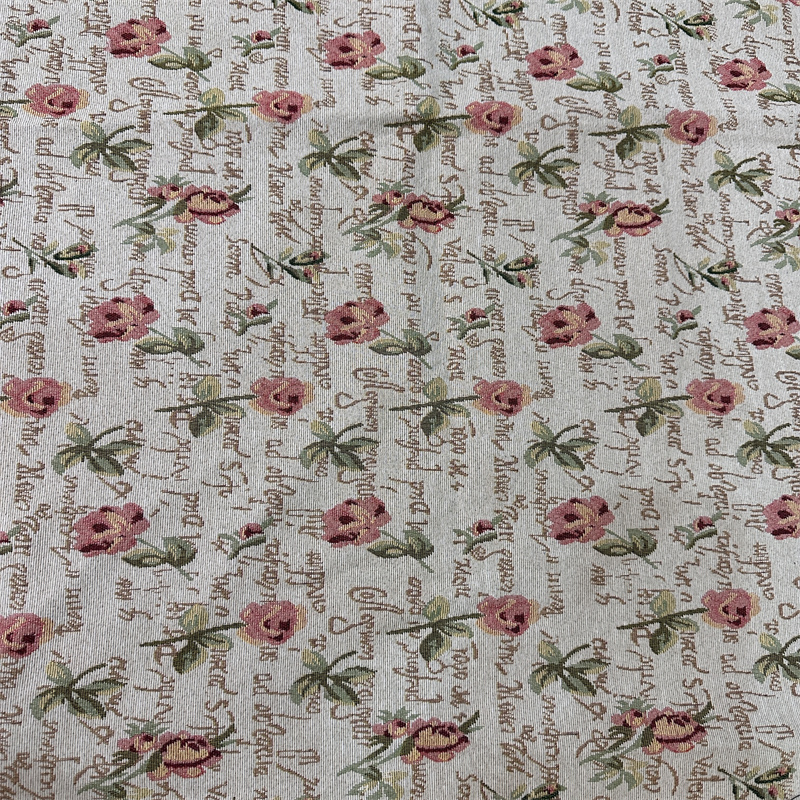
All-over jacquard fabric is a woven textile in which an intricate pattern is built directly into the structure of the cloth across its entire surface, rather than being printed on top or limited to a border or isolated motif. The pattern emerges from the way warp and weft threads interlace, often combining multiple colors or yarn types to create raised, textured designs that remain consistent from edge to edge of the fabric. This continuous coverage is what distinguishes all-over jacquard from other jacquard styles, where decorative elements might appear only along a hem, a central panel, or in a repeating but spaced motif.
Because the design is woven rather than printed, all-over jacquard fabric tends to have a more dimensional, tactile quality and greater durability than printed alternatives, since the pattern cannot peel, crack, or fade in the same way surface applied prints can over time.
How All-Over Jacquard Fabric Is Woven
Jacquard fabric is produced on a specialized loom called a jacquard loom, which uses a punch card or, in modern production, a computer controlled system to individually control each warp thread. This level of control allows the loom to raise or lower specific threads in complex sequences, enabling the creation of detailed patterns that would be impossible on a standard dobby or plain weave loom, which can only control threads in simpler, repeating groups.
For an all-over design, the pattern programming extends consistently across the full width and length of the fabric roll, rather than being limited to specific zones. This requires careful planning during the design phase to ensure the repeat pattern aligns seamlessly when the fabric is cut and sewn into finished products, since any misalignment in the repeat can become visually obvious in garments or home textiles made from multiple fabric panels.
All-Over Jacquard vs Border or Engineered Jacquard
Jacquard weaving supports several distinct pattern placement styles, and understanding the differences helps clarify why all-over designs are chosen for certain applications over others.
| Jacquard Style | Pattern Placement | Typical Use |
| All-Over Jacquard | Continuous pattern across the entire fabric | Apparel yardage, upholstery, large panels |
| Border Jacquard | Pattern concentrated along one or both edges | Scarves, table runners, decorative trims |
| Engineered Jacquard | Pattern placed to match a specific garment shape | Tailored jackets, fitted dresses, panel inserts |
All-over jacquard is generally the most flexible option for cutting and sewing, since the consistent pattern means pieces can be cut from nearly any part of the fabric roll without worrying about losing a specific design feature, unlike border or engineered styles that require precise pattern placement during cutting.
Common Applications of All-Over Jacquard Fabric
The continuous pattern coverage of all-over jacquard makes it suitable for a wide range of products where consistent texture and design are desired throughout. Frequent applications include the following.
- Dress and shirting fabric for apparel brands seeking a textured, woven-in pattern instead of a printed design
- Upholstery fabric for sofas, chairs, and ottomans where durability and dimensional texture are valued
- Drapery and curtain fabric that benefits from a subtle, continuous pattern visible from any vantage point
- Bedding such as duvet covers and decorative shams that require an even pattern across large flat panels
- Accessories including bags, hats, and small goods where a consistent pattern reads well regardless of cutting angle
How to Choose the Right All-Over Jacquard Fabric
Consider Fiber Content for the Intended Use
All-over jacquard fabric can be woven from cotton, silk, polyester, wool, or various blends, and the fiber content significantly affects drape, breathability, and care requirements. Cotton and cotton blends suit casual apparel and home textiles, silk jacquard offers a luxurious drape suited to eveningwear or fine drapery, and polyester blends provide durability and easy care for upholstery or heavy use items.
Evaluate Fabric Weight and Hand Feel
Jacquard weaving can produce fabrics ranging from lightweight and fluid to heavy and structured, depending on yarn thickness and weave density. Lighter weight jacquard works well for blouses and dresses that need movement, while heavier weight versions are better suited to upholstery, outerwear, or structured garments that benefit from added body.
Match Pattern Scale to the Final Product
Since the pattern repeats continuously, the scale of the design matters significantly depending on the size of the finished piece. Large scale patterns can look striking on big home textile items like curtains or bedspreads but may appear overwhelming on smaller garments, while finer, smaller scale patterns tend to translate well across both large and small applications.
Care and Maintenance Tips
Because the pattern in jacquard fabric is woven rather than printed, it generally withstands washing and regular use better than printed textiles, though specific care still depends on the fiber content used. Natural fiber jacquards such as silk or wool often require gentler washing methods or dry cleaning, while cotton and polyester blends are typically more forgiving and machine washable.
- Turn jacquard garments inside out before washing to protect the raised pattern surface from abrasion
- Use a gentle or delicate wash cycle with cold water to preserve color and prevent excessive shrinkage
- Avoid wringing or twisting jacquard fabric, since this can distort the woven pattern over time
- Iron on the reverse side using a pressing cloth to avoid flattening the raised texture of the weave
By understanding how all-over jacquard fabric is constructed and matching fiber content, weight, and pattern scale to the intended project, designers and crafters can take full advantage of this fabric's durability and visual depth, producing finished pieces that maintain their distinctive woven pattern through years of regular use.